
How to get a gun license in Massachusetts
Updated: July 16, 2026
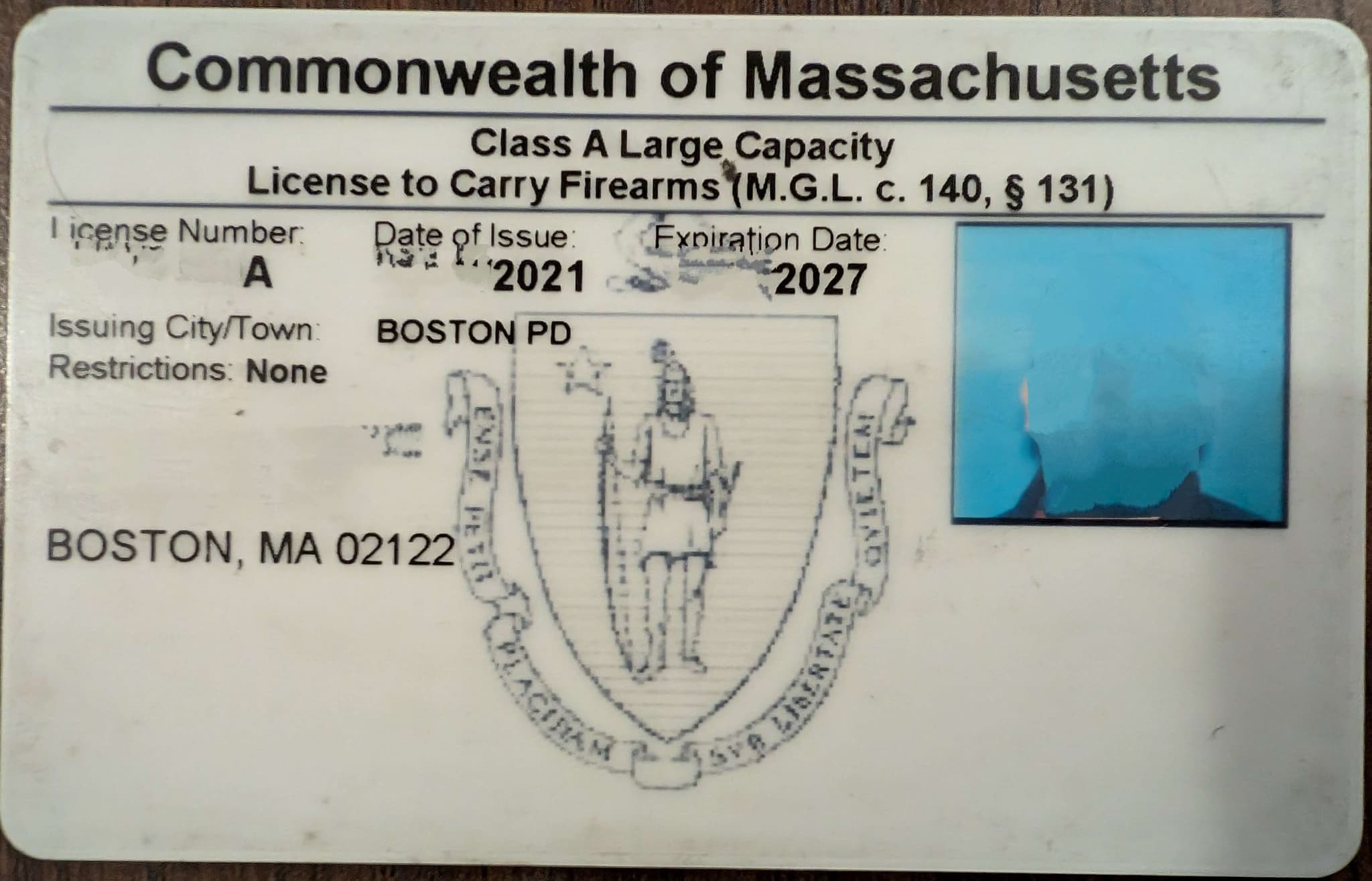
If you want a License to Carry (LTC) or Firearms Identification Card (FID), you must complete state-approved training, submit an application through your local police department (or the Firearms Records Bureau for non-residents), get fingerprinted, and wait for approval. This guide walks through the process step by step, including the training changes that took effect on April 2, 2026 and how to apply through the MIRCS Unified Gun Portal.
Step 1: Choose the license type (FID vs LTC)
Massachusetts issues two main resident gun licenses: the License to Carry (LTC) and the Firearms Identification Card (FID). For either license, you must be a U.S. citizen or permanent resident and must not be a "prohibited person" under Massachusetts General Laws chapter 140, section 121F. Both resident licenses are typically valid for 5–6 years and expire on your birthday.
| Topic | FID | LTC |
|---|---|---|
| Minimum age | 15 to receive (may apply at 14; under 18 needs parent/guardian permission) | 21 |
| What you can possess | Non-large-capacity, non-semiautomatic rifles and shotguns (for example, many bolt-action rifles and pump shotguns) | Handguns and other lawful firearms, including large-capacity firearms that are not prohibited assault-style firearms. You may also carry concealed. |
| Residency | Massachusetts residents | Residents, or non-residents via Temporary LTC |
| Suitability review | Prohibited-person check | Prohibited-person check plus possible "unsuitable" determination by the licensing authority |
| Standard fee | $100 ($25 if under 18) | $100 |
If you are over 21, we generally recommend applying for the LTC even if an FID would meet your current needs. The LTC provides more flexibility if your requirements change later.
For more detail, see our FID & LTC reference.
Step 2: Complete the required firearms safety training
First-time applicants must complete a Massachusetts State Police–approved basic firearms safety course and submit the certificate with their FID or LTC application. A hunter education certificate can substitute for the FID only.
Training requirements updated April 2, 2026
Chapter 135 of the Acts of 2024 changed what basic firearms safety courses must cover. Courses must now include:
- Safe use, handling, and storage of firearms
- Securing and childproofing firearms
- Massachusetts laws on possession, transportation, and storage
- Injury and suicide prevention / harm reduction
- Laws relating to the use of force
- Disengagement tactics
- A written examination
- Live firearms training
To pass, students must demonstrate competency in class, pass the written exam, and participate in live firearms training. Read the full breakdown in our training requirements reference.
Live fire: what applicants need to know
Live firearms training is now part of the statutory curriculum. Formal statewide enforcement details are still being finalized by EOPSS, and there has been public guidance that live-fire requirements will not be fully enforced until regulations are in place. Even so, many towns have long required live fire before they will process an LTC application.
Towns that commonly expect live fire include Quincy and Weymouth, among others. Because local practice varies, contact your local police department's firearms licensing unit and ask whether they currently require a live-fire certificate.
Our Massachusetts LTC & FID class in Boston includes live fire with a 9mm semi-automatic pistol in the same session, so you do not need a second appointment for shooting.
Step 3: Submit your application (MIRCS portal or paper)
Residents apply through the police department in the city or town where they live. Non-residents apply for a Temporary LTC through the Firearms Records Bureau. Most applicants should start online through the MIRCS Unified Gun Portal, then follow any local instructions for payment and documents.
How to apply through the MIRCS Unified Gun Portal
- Create or sign in to a MyMassGov account and open the MIRCS Unified Gun Portal.
- Start a resident FID/LTC application (or non-resident Temporary LTC application, if applicable).
- Upload or attach your basic firearms safety certificate and the identification / residency documents your licensing authority requires.
- Pay the $100 fee. Recent reports indicate a payment link is now sent via email after submitting the application, but you may have to contact your local licensing unit to arrange payment.
- Watch for follow-up instructions for fingerprinting (and, in some towns, an interview).
The portal is relatively new. Some departments still prefer or require in-person paper packets even if you begin online. For non-resident applicants, starting in MIRCS is usually the best path because the Firearms Records Bureau processes those applications.
Documents you will typically need
- Completed application (portal and/or paper form)
- $100 application fee payment (confirm accepted methods locally)
- Copy of your training certificate
- Proof of residency (for residents, such as State ID or Driver's License)
- Passport or birth certificate
Some towns also ask for letters of reference or other supporting documents. Call your local licensing unit before you submit so you do not delay processing. Paper forms are still available here:
Official overview: Apply for or renew a firearms license (Mass.gov).
Step 4: Fingerprinting and interview
After your application is received, your local police department will process it and contact you to schedule fingerprinting. Some departments also conduct an interview, although many students report that fingerprinting is the main in-person step.
Non-resident Temporary LTC applicants typically need to appear in-person at the Firearms Records Bureau in Chelsea, MA for fingerprinting on the initial issuance.
Step 5: Wait for your license to be issued
By statute, the licensing authority has 40 days after receiving a completed application to issue or deny your license. In practice, wait times often run longer depending on the city or town. Once approved, you may receive the license by mail or be asked to pick it up. You will also receive a PIN used for firearm purchases and related portal activity.
After you get your license
Keep your license current and update your address in the MIRCS portal within 30 days if you move. If you travel outside Massachusetts, remember that MA does not have reciprocity agreements that automatically let other states honor an LTC the way some states do. Some states will allow you to carry a firearm through constitutional or permitless carry policies, but even so, some Massachusetts residents add out-of-state permits to expand legal carry coverage. See our multi-state licensing guide for MA residents or our multi-state licensing class.
Frequently asked questions
The information above does not constitute legal advice and we make no claims regarding the accuracy of any information. We do our best to gather information from reliable third-party sources but laws and regulations are subject to change and we are under no obligation to update the information provided. This material is simply provided for your convenience. Please do your due diligence in regards to legal matters. Please contact us if there are any inaccuracies present.